Welcome to another Logistics News Update.
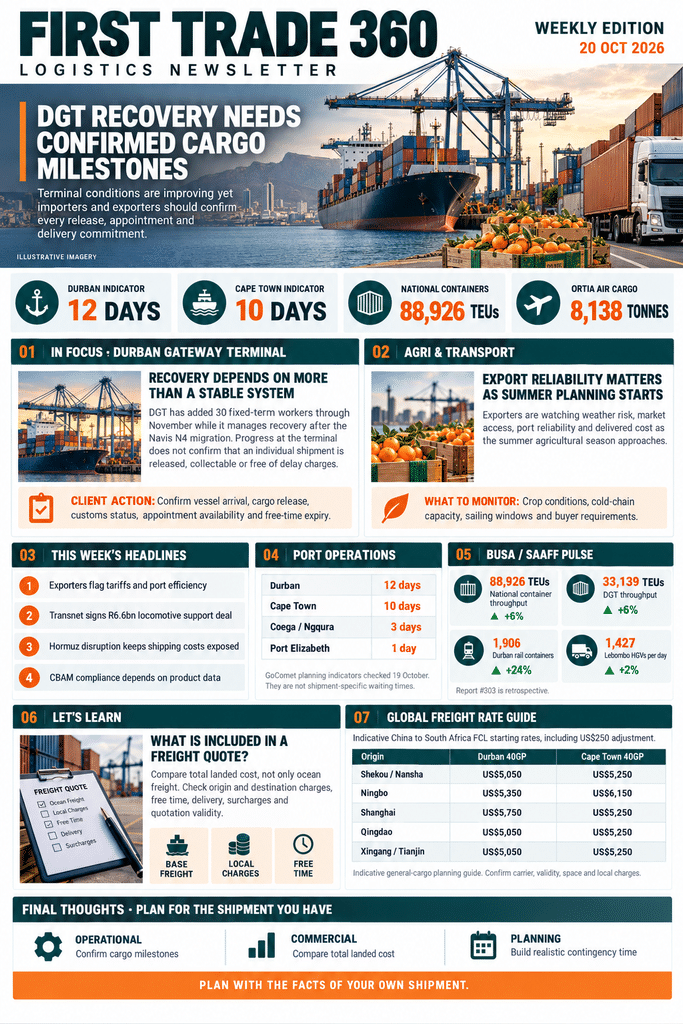
Durban Gateway Terminal is showing signs of recovery following the Navis N4 migration, although the practical test remains whether each shipment can move from vessel arrival to release, collection, and delivery without avoidable delay. Port planning indicators checked today shows Durban at 12 days delay and Cape Town at 10 days, this was an increase from last week 8 days. These are port wide planning signals rather than confirmed waiting times for individual containers, we know that some vessels are delayed by more than a month, so stay connect to get the real updates on the delays.
Remember that we are in peak, and this means the black Friday sales will start in November and any stock that is in the ‘jam’ may be delayed. The latest BUSA update reported national container throughput of 88,926 TEUs for the week to 11 October, up 6%, while Durban rail container movements increased 24% to 1,906. This is positive progress, yet it does not remove the need to confirm carrier release, customs status, terminal availability, free time, and transport arrangements for every priority shipment.
Exporters are also entering the summer planning period with market access, port reliability, and delivered cost firmly in focus. Global shipping risk around Hormuz continues to affect voyage planning and freight charges, while the China to South Africa rate guide in this edition shows why a freight estimates should be assessed on its total cost rather than ocean freight alone.
Still a lot of pressure on the diesel price in the logistics world and we expect anything from R1.30 upwards as a n increase in the first week of November, petrol will go up over R2. a litre.
The practical priority this week is simple: plan from confirmed shipment milestones and obtain clear written cost and timing commitments before making promises to customers or suppliers.
Agri & Transport Summary
South African agricultural exporters are entering the 2026/27 summer season with stronger soil moisture and fuller dams than before the 2015/16 drought, although the growing El Niño risk still requires careful planning. Agriculture Minister Willie Aucamp warned last week that November to January could be exceptionally hot and dry, while farmers in rain fed regions remain more exposed than irrigated producers even where dam levels are currently supportive. The immediate logistics implication is that exporters need to plan for possible changes in crop volumes, harvest timing, cold-chain demand, and transport costs before the season reaches its peak. A weather event does not automatically mean lower export volumes, yet it can change product quality, water availability, packing schedules and the timing of cargo moving to port.
Market access remains equally important. export bodies surveyed at the Western Cape Export Industry Dialogue identified tariffs and market entry costs as their main concern, while more than 70% also raised port efficiency. For agricultural exporters, a new market only becomes commercially valuable when the product can meet the buyer’s specification and arrive in the required condition at an acceptable delivered cost.
What to monitor: Official seasonal weather updates, municipal water restrictions, planting and crop estimates, cold-store capacity, confirmed vessel windows and market-specific tariff or compliance requirements.
Logistics & Trade Headlines
- DGT recalls fixed-term workers as recovery remains incomplete. Durban Gateway Terminal has brought in 30 fixed-term Transnet workers through November while it works through the effects of the Navis N4 system migration. The terminal says operations are stabilising, yet customers should still plan from confirmed cargo milestones rather than general recovery announcements.
- Exporters raise concern over tariffs and port reliability. Export bodies at the Western Cape Export Industry Dialogue identified market-entry costs and tariffs as a major concern, while more than 70% also highlighted port efficiency. Export growth depends on competitive access to the market and a reliable route to the buyer.
- Transnet signs R6.6 billion locomotive support agreement. The agreement with Wabtec supports maintenance, components, and technical services for Class 43D and 44D locomotives. It supports long-term rail reliability for containers and export commodities although it does not create immediate additional rail capacity.
- Hormuz disruption keeps shipping costs exposed. Security risks around the Strait of Hormuz continue to affect insurance, fuel, and voyage planning. South African importers and exporters should check route-specific surcharges and quotation validity before confirming landed costs.
- CBAM compliance depends on product data. Exporters supplying carbon-intensive products into the European Union need reliable information on material inputs, processing, and emissions. Missing data can result in less favourable default values and higher compliance risk.
What to monitor: Confirmed berth windows at Durban and Richards Bay, progress on the ITAC consultation, firm buyer orders rather than enquiries, Saldanha project commitments and developments affecting access to the US market.
Let’s Learn, What Is Included in a Freight Estimate?
A freight estimate is only useful when it shows what is included and what remains payable. The ocean freight figure may cover the carrier’s base transport charge, yet origin handling, documentation, customs clearance, destination terminal charges, delivery, storage, and equipment detention can still sit outside that amount. Two estimates can show the same base freight rate while producing very different landed costs. One supplier may include 14 free days at destination while another allows seven days, one may include local handling charges while another leaves them for the importer to settle after arrival. Before accepting an estimate, ask for the total cost broken down by origin charges, ocean freight, destination charges, customs related costs, delivery charges, free time, and applicable surcharges. Confirm the estimate validity date, sailing date and cargo assumptions in writing and if they have the slot available. An estimate does not mean they have secured the container on the vessel, you need to know this before accepting and estimate.
Importer takeaway: The lowest freight figure is not always the lowest delivered cost, compare like for like before approving the shipment.
NEWS – IN FOCUS
DGT Recovery Depends on More Than a Stable System
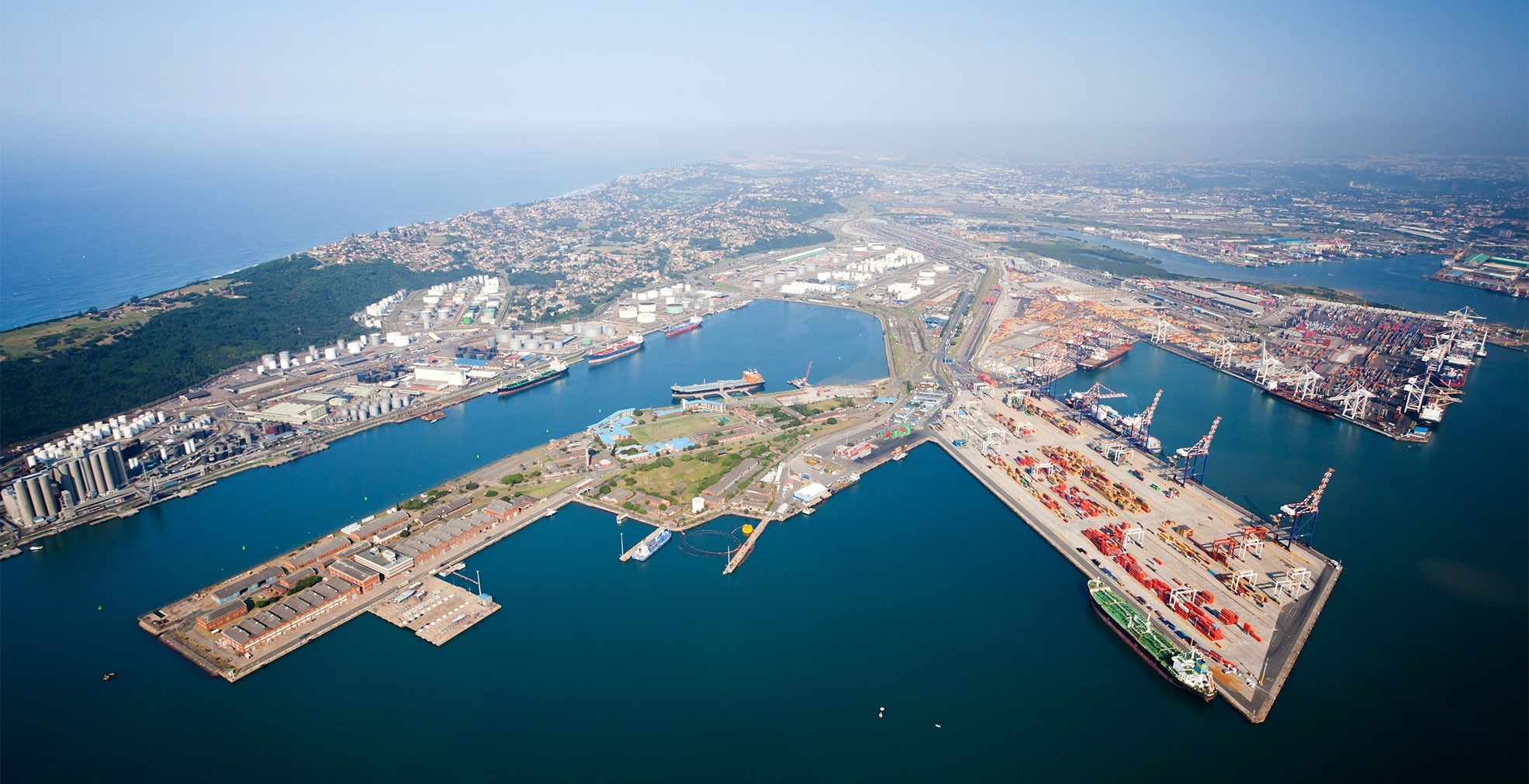
Durban Gateway Terminal is showing signs of improvement after the disruption linked to its Navis N4 migration, although recovery still depends on labour availability, equipment reliability, and the flow of containers beyond the terminal gate. Daily Maverick reported that around 30 fixed-term Transnet workers have been brought into DGT through November. Transnet says the workers were sourced in August and that delayed salary payments resulted from administrative documentation shortfalls, with a special payment run scheduled for 23 October. The report also included anonymous allegations about staffing and safety conditions which have not been independently verified.
DGT says the Navis system is stable and that operational conditions are improving. This is encouraging, although SAAFF has warned that stabilisation should not be treated as full recovery. Previous reporting showed that terminal progress can still be limited by vessel queues, berth delays, collection constraints, and pressure shifted to Pier 1 and Point. For cargo owners, the main issue is whether their own container can move through each milestone. A general improvement in terminal performance does not confirm that a specific shipment has discharged, been released, secured a collection slot or avoided additional charges.
What this means for importers and exporters: Confirm the vessel arrival, discharge status, carrier release, customs status, appointment availability, free-time expiry and expected collection or delivery date for each priority shipment.
What to monitor: DGT’s updated appointment-system plans, terminal equipment rollout, vessel queues, truck turnaround performance and whether improved waterside activity translates into faster cargo evacuation.
Port Operations Update:
| Port | Indicator |
| Durban | 12 days |
| Cape Town | 10 days |
| Coega | 3 days |
| Port Elizabeth | 1 day |
These are port-wide planning indicators based on schedule disruption. They can change during the day and do not confirm a vessel’s berth time, a container’s availability, or a truck appointment.
Cape Town’s indicator has increased to 10 days and should be treated as a signal to confirm sailing schedules, terminal acceptance, and contingency time. Durban remains elevated at 12 days, which makes dated updates from the carrier and clearing agent important before committing to delivery or production plans.
Key Highlights from Last Week’s Discussions – 11 October 2026
Source: BUSA, SAAFF and global logistics data
Port Operations
South African container terminals handled 88,926 TEUs, up 6% week on week. DGT handled 33,139 TEUs, also up 6%, while Ngqura increased 46%and Cape Town declined 34%.
Key insight: Better national throughput does not mean every port or shipment is moving at the same pace.
Durban landside movement
- Reported Durban rail evacuation increased 24% to 1,906 containers. The report also recorded 11 vessels at anchorage, approximately 251 hours at anchorage and 127 hours alongside during its reporting period.
- Key insight: More rail movement helps reduce pressure, yet landside and waterside constraints can continue at the same time.
Air Cargo
- OR Tambo handled approximately 8,138 tonnes of international air cargo, up 8% week on week. Inbound cargo increased 6% and outbound cargo increased 11%.
- Key insight: Airfreight capacity and airport cargo movement should be checked together with warehouse access, flight availability, and uplift confirmation.
Road and Border Crossings:
- Lebombo handled 1,427 heavy vehicles a day, up 2%, while queue time increased to approximately 5.5 hours and processing time increased to approximately 5.3 hours.
- Key insight: Higher vehicle volumes can increase both queueing and processing time, so exporters should build border contingency into delivery plans.
Global Shipping Context
- BUSA reported continued security risk around Hormuz, congestion in parts of Asia and 34 planned blank sailings across East-West services between weeks 42 and 46.
Key insight: A shipment can be affected by network disruption before it reaches a South African port.
Global Freight Rates – Drewry:
| Origin | Durban 20GP | Durban 40GP / 40HQ | Cape Town 20GP | Cape Town 40GP / 40HQ |
| Shekou / Nansha | US$3,550 | US$5,050 | US$3,650 | US$5,250 |
| Ningbo | US$4,250 | US$5,350 | US$4,850 | US$6,150 |
| Shanghai | US$4,350 | US$5,750 | US$4,450 | US$5,250 |
| Qingdao | US$3,950 | US$5,050 | US$4,150 | US$5,250 |
| Xingang / Tianjin | US$3,550 | US$5,050 | US$3,650 | US$5,250 |
Drewry’s World Container Index was US$4,351 per 40ft container on 8 October, down 1.9% week on week, this is a global market benchmark and should not be used as a South African shipment quotation. It is just giving you an average of rates to South Africa at the moment.
Commercial takeaway:
Obtain a written estimate that identifies the carrier, route, equipment, free time, validity date, local charges, and every surcharge before confirming the order.
Final Thoughts
DGT’s recovery is moving forward, yet reliability still needs to be confirmed at shipment level. Importers and exporters should use the improved operational picture as a reason to check milestones earlier rather than assume that every delay has cleared.
- Operational: Obtain dated confirmation of vessel arrival, cargo release, customs status, terminal availability and collection or delivery timing for priority shipments.
- Commercial: Compare freight estimates on total landed cost, including origin and destination charges, free time, surcharges, and quotation validity.
- Planning: Build contingency time into port, border, and delivery commitments where a delay would affect production, customer supply, or product quality.
A dependable supply chain is built from confirmed actions and clear ownership at every stage.
Brought to you by First Trade 360™, your partner in logistics and Exporters Western Cape
“This information contained herein is being made available for indicative purposes only and does not purport to be comprehensive as the information may have been obtained from publicly available sources that have not been verified by FirstRand Bank Limited (“FRB”) or any other person. No representation or warranty, express, implied or by omission, is or will be given by FRB, its affiliates or their respective directors, officers, employees, agents, advisers, representatives or any other person as to the adequacy, reasonableness, accuracy or completeness of this information. No responsibility or liability is accepted for the accuracy or sufficiency thereof, or for any errors, omissions or misstatements, negligent or otherwise, relating thereto. In particular, but without limitation, no representation or warranty, express or implied, is given as to the achievement or reasonableness of and no reliance should be placed on, any projections, targets, estimates or forecasts and nothing contained herein should be relied on as a promise or representation as to the past or future. FRB does not undertake any obligation to provide any additional information or to update the information contained herein or to correct any inaccuracies that may become apparent. The receipt of this information by any person is not to be taken as constituting the giving of any advice by FRB to any such person, nor to constitute such person a client of FRB.”