

Welcome to another Logistics News Update.
It has been all over the press and we know that AGOA will come to end for us as the United States has announced its intention to remove South Africa from the African Growth and Opportunity Act (AGOA) effective 1 January 2027, ending duty free access for key export sectors and potentially increasing tariff costs for South African goods entering the US market.
This week shows that parts of the logistics network are moving better, although the pressure has not disappeared. The latest BUSA update recorded stronger national container volumes and improved waterside movement at Durban Gateway Terminal, yet the vessel backlog and port delays still need to be managed carefully. Durban Pier 2 remains the main concern, with carrier reported delays of 12 to 14 days, while Cape Town Container Terminal is reporting delays of up to 72 hours as the fruit export season begins.
The fuel levy relief that started last week may provide some breathing space for road freight costs, although importers and exporters still need to check how their transport provider adjusts fuel surcharges and whether the saving reaches the final delivery cost. A lower levy does not automatically reduce the full cost of collecting a container or delivering cargo inland.
Market access is also becoming a more important part of logistics planning. South Africa’s proposed AGOA exit from January 2027 does not close the United States market, although exporters need to understand the duty and tariff exposure of their own product before agreeing to prices, contracts, or delivery commitments for next year. This is especially important for agricultural exporters where a change in duty can affect the margin on an entire export programme.
The practical message this week is to keep looking beyond the booking confirmation, confirm the actual vessel position, the port and cargo status, the release process, the transport plan, and the full landed cost before making a promise to a customer or supplier.
Transport Summary
Market access and import protection are moving higher on the agenda
South Africa’s exclusion from AGOA from 1 January 2027 has made market access an immediate planning issue for agricultural exporters. The United States market remains open, although businesses that previously used AGOA duty free treatment will need to understand the duty, tariff exposure, and landed cost for each product before agreeing to 2027 prices or supply commitments. This is particularly important for citrus growers and exporters whose orchards, packhouses and customer relationships have been developed for the United States market.
The issue is not only about finding another buyer for fruit. A grower cannot simply move a United States programme to another country because market access, phytosanitary rules, packaging requirements, customer preferences, and shipping arrangements differ from one destination to another. Exporters should use the coming months to speak to their United States importers, customs brokers, and freight partners about the expected cost of entry and the timing of cargo arriving from January.
The domestic sugar industry is also facing an uncertain trade environment. Government is considering tighter controls and possible quotas on deep sea sugar imports after increased imports placed pressure on local producers. These measures have not been implemented, so importers should not assume that the rules have changed. Anyone importing sugar or buying it as an input should monitor further announcements from the trade authorities and check how any new measure could affect supply, customs duty, and local pricing.
For agricultural cargo, the practical message remains that market access and logistics planning need to be dealt with together. A confirmed buyer is not enough if the product does not meet the destination requirements, the export documents are incomplete, or the cargo cannot move through the port and cold chain within the planned window.
What to monitor: The 60-day engagement on AGOA, product specific United States duty exposure, buyer discussions for 2027, any formal decision on sugar import controls, phytosanitary requirements, cold store readiness, and confirmed vessel loading windows.
Logistics & Trade Headlines
- Exporters call for urgent engagement on AGOA: Exporters are calling for an urgent trade mission to Washington after the United States gave notice that South Africa’s AGOA benefits may end from 1 January 2027. The United States market remains open, although exporters need to understand the product specific duty and tariff exposure before agreeing to 2027 prices or delivery commitments.
- New weekly China to Maputo service starts later this month: DP World plans to launch its China Africa Link service in late November, connecting Shanghai, Ningbo and Nansha with Dar es Salaam and Maputo. This gives importers another routing option into the region, although Maputo should only be considered after comparing port charges, border processes, inland transport availability, and the final delivery cost.
- China to South Africa freight faces another surcharge: CMA CGM has introduced a peak season surcharge of US$300 per TEU for short term cargo moving from China to South Africa from 1 November. Importers should check whether the surcharge applies to their booking and whether it is already included in the carrier quotation.
- Fuel levy relief is now in effect: The temporary fuel levy reduction started on 4 November. Diesel relief is R3 per litre until 1 December, while petrol relief is R1.50 per litre for the same period. This may reduce some pressure on road freight costs, although transporters will still need to decide how they adjust fuel surcharges.
- Richards Bay road work targets port access: A R375 million rehabilitation programme has begun on three key roads serving the Port of Richards Bay. The work is expected to run for 18 months and aims to improve truck flow, safety, and turnaround times, although businesses using the port should still allow for construction related disruption.
- Rail recovery needs to reach the exporter: Train slot availability on the Sishen Saldanha corridor has improved from 35 to an average of 49 a week, while Transnet works towards a sustainable level of 56 slots. The improvement is positive, although rail capacity only benefits exporters when locomotives, wagons, terminal capacity, and vessel loading all work together.
What to monitor: AGOA engagement, China origin surcharges, carrier quotations, fuel surcharge adjustments, the launch of the Maputo service and rail capacity that translates into actual cargo movement.
Let’s Learn: What happens when cargo is caught in a vessel casualty?
AA vessel casualty is an event such as a fire, grounding, collision, or serious mechanical failure that affects a ship and the cargo on board. When this happens, cargo may be delayed while the vessel is assessed, repaired, moved to a place of refuge, or discharged. Cargo can also be exposed to heat, smoke, water, or handling damage even where the container was not directly involved in the incident.
Two terms are important. Salvage security may be requested when salvors have been appointed to protect the vessel and cargo. General average is a separate maritime principle that can require vessel and cargo interests to share certain extraordinary costs incurred to save the voyage. General average is not automatic, and it must not be assumed simply because a vessel has suffered an incident.
Where businesses get caught: The cargo owner only hears about the problem after the original sailing date has passed, then discovers that the insurer has not been notified or that a security request must be dealt with before the cargo can move. The result can be a delay in release even where the cargo itself is not damaged.
Hypothetical example: A container of imported machinery is on a vessel that suffers a fire. The machinery may be undamaged, although the vessel cannot continue until the authorities, salvors and insurers have assessed the position. The importer should immediately obtain the container number, bill of lading, insurer contact details, carrier notices and a written update on the cargo’s location and release requirements.
Practical takeaway: If your cargo is on an affected vessel, notify cargo insurers immediately and ask the carrier or forwarder for written confirmation of the cargo status, any salvage or general average notice and the expected next step.
NEWS – IN FOCUS
South Africa’s AGOA exit triggers fresh trade anxiety
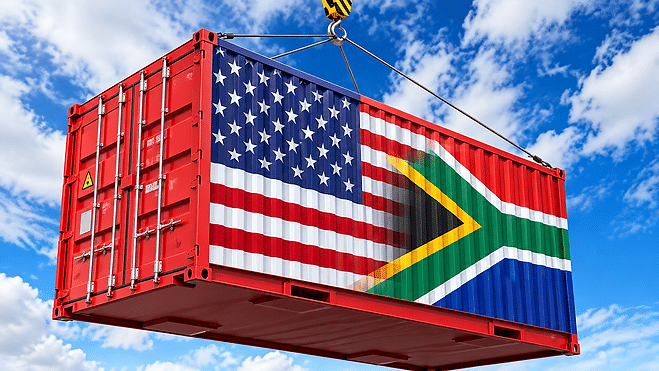
South Africa has received formal notice that the United States intends to end the country’s AGOA benefits from 1 January 2027, the notice gives South Africa 60 days to engage with the United States and government has said that it will continue working to find a solution while assessing the impact on affected industries.
The most important point for exporters is that South Africa has not been shut out of the United States market. Goods can still be sold to American customers, although products that currently receive duty free treatment under AGOA may be subject to the normal United States import duty and any additional tariffs that apply to the specific product. The effect will therefore differ from one shipment to another.
Government has said that about 89% of South African exports to the United States already entered under normal World Trade Organisation terms in 2025. The remaining AGOA supported trade was valued at about US$1.7 billion, which means the exposure is concentrated in certain industries and regions rather than spread evenly across the economy.
Citrus is one of the sectors that could feel the change most directly. Growers in the Western and Northern Cape have built orchards, packhouse programmes and customer relationships around the United States market. The fruit cannot simply be moved to another buyer because every destination has its own phytosanitary requirements, packaging rules, consumer preferences, and commercial arrangements.
For citrus, the normal United States duty is generally between 1.5 and 2.5 US cents per kilogram, depending on the product and timing. Mandarins, lemons, and grapefruit may also face the additional 12.5% Section 301 tariff. Oranges are currently exempt from the additional tariff, although they would still lose their AGOA duty free preference if the change takes effect.
The commercial concern is not only the duty itself. A buyer and exporter need to agree on who carries the additional cost, whether the new landed cost still works in the market and whether the shipment can enter the United States at the required price. Businesses working on low margins or fixed customer prices will need to start this review first.
What this means for clients: Do not cancel United States business or change pricing based only on the headline. Speak to the importer, customs broker, and freight forwarder to confirm the tariff code, origin requirements, expected entry date into the United States and the full landed cost from January 2027. Existing orders and 2027 contracts should be reviewed now, particularly where the duty cost has not been allocated between buyer and seller.
What to monitor: The 60-day engagement process, any further United States or South African government announcement, product specific duty exposure, Section 301 treatment, customer pricing discussions and whether alternative markets can realistically meet the required product, timing, and commercial terms.
Port Operations Update:
| Port | Indicator |
| Durban | 6-9 days |
| DGT | 12-14 days |
| Cape Town | 3 days |
| Coega | 2-3 days |
| Port Elizabeth | 1-2 days |
These are carrier reported operating conditions as of 6 November and should not be treated as confirmed waiting times for a specific vessel or container. Actual delays will depend on the vessel, terminal, berth position, weather, discharge progress, carrier release, and collection arrangements.
- Durban: DGT remains the main concern, with reported delays of 12 to 14 days at Pier 2. Cargo owners should obtain a dated vessel position, discharge update, release status, and collection plan before confirming delivery.
- Cape Town: Delays of up to 72 hours at Cape Town Container Terminal. The fruit export season still requires close planning because wind, vessel bunching and late reefer deliveries can affect individual sailings.
- Coega and Port Elizabeth: Both ports remain comparatively more manageable, although weather related delays are still being reported. They may offer an alternative for certain shipments, but the inland transport cost, equipment position and realistic delivery date must be checked before changing the routing.
What to monitor: Durban Pier 2 vessel delays, Cape Town weather and reefer acceptance, actual vessel berth dates, carrier release, free days, truck availability, and the full inland delivery cost.
Key Highlights from Last Week’s Discussions – 25 October 2026
Source: BUSA, SAAFF and global logistics data
Port Operations
South African container terminals handled 100,423 TEUs, up 20% from the prior week. DGT waterside throughput increased 12% to 34,976 TEUs, averaging about 4,997 TEUs a day, although DGT stack occupancy rose to 70% and 13 vessels remained at anchorage. The report noted that affected supply chains could still carry about 20 additional days.
Key Insight: Better weekly throughput does not mean the Durban vessel backlog has cleared.
Air Cargo
- International air cargo through OR Tambo reached 6,879 tonnes, up 3% week on week. The report recorded stronger inbound daily volumes and lower outbound daily volumes.
Key Insight: Total air cargo growth can hide different conditions for imports and exports, so capacity needs to be confirmed by direction and route.
Rail and Inland Movement:
- Reported rail cargo handled out of Durban increased 40% to 2,463 containers.
Key Insight: Rail evacuation is improving, although it needs to be sustained to reduce pressure on road collection and terminal space.
Road and Border Crossings:
- South African border crossing times increased to about 11.6 hours, while the broader SADC figure improved to about 8.1 hours. Beitbridge, Chirundu, Kasumbalesa and Katima Mulilo each averaged a day or more to cross, with the Zambian side of Kasumbalesa taking around six days.
Key Insight: A better regional average does not remove the need to plan for the specific border and direction of travel.
Global Shipping Context
- The report noted very high October and November capacity deployment on Asia Europe and Asia Mediterranean trades. It also reported congestion in Middle Eastern and European ports, while Durban’s queue to berth ratio increased.
Key Insight: More capacity does not always mean a more reliable schedule when vessels arrive in groups or ports remain congested.
Global Freight and Air Cargo Context:
- BUSA cited Drewry’s World Container Index at US$4,429 per 40-foot container at the time of its report. It also noted softer global air cargo volumes while spot rates increased.
Key Insight: These are dated global benchmarks, not quotes for a South African shipment.
Strategic Outlook
The report shows better national throughput, stronger DGT waterside movement and higher Durban rail evacuation. The Durban vessel backlog, elevated stack occupancy and slow movement through certain border posts remain the main risks. Cargo owners should keep planning at shipment level, using the actual vessel, container, release, and transport position rather than national averages.
What to monitor: DGT anchorage, stack occupancy, discharge and import evacuation, Durban rail movement, Cape Town fruit season performance, Beitbridge and Kasumbalesa crossing times, air cargo capacity by route and carrier schedule changes.
Global Freight Rates – Drewry
Drewry’s World Container Index declined 1% to US$4,389 per 40-foot container on 5 November. Shanghai to Rotterdam fell 2% to US$3,615, Shanghai to Genoa was stable at US$4,166, Shanghai to Los Angeles was unchanged at US$7,539 and Shanghai to New York fell 3% to US$9,303.
The index is a global market benchmark and not a freight quotation for South African cargo. It does show that rates have softened on several major routes as capacity improves, although planned carrier increases, blank sailings, port disruption, and local surcharges can still change the price paid on a specific shipment.
Final Thoughts
Know What Can Change Before You Commit
- Operational: Confirm the vessel position, cargo release, terminal access, and transport plan before committing to a collection or delivery date.
- Commercial: Recheck the full landed cost where a new surcharge, fuel adjustment, tariff change, or diversion has been introduced.
- Planning: Keep the United States importer, customs broker, freight forwarder, and customer involved early where cargo may be affected by AGOA changes, a vessel casualty, or a congested port.
This week shows why logistics planning needs to go beyond the booking confirmation. A cargo owner may have a vessel booking, a buyer and a freight quotation, although the final result still depends on the port, the carrier, the route, the documents, and the last inland movement all working at the same time. Keeping those steps connected protects delivery reliability, product quality, and margin.
Brought to you by First Trade 360™, your partner in logistics and Exporters Western Cape.pe
“This information contained herein is being made available for indicative purposes only and does not purport to be comprehensive as the information may have been obtained from publicly available sources that have not been verified by FirstRand Bank Limited (“FRB”) or any other person. No representation or warranty, express, implied or by omission, is or will be given by FRB, its affiliates or their respective directors, officers, employees, agents, advisers, representatives or any other person as to the adequacy, reasonableness, accuracy or completeness of this information. No responsibility or liability is accepted for the accuracy or sufficiency thereof, or for any errors, omissions or misstatements, negligent or otherwise, relating thereto. In particular, but without limitation, no representation or warranty, express or implied, is given as to the achievement or reasonableness of and no reliance should be placed on, any projections, targets, estimates or forecasts and nothing contained herein should be relied on as a promise or representation as to the past or future. FRB does not undertake any obligation to provide any additional information or to update the information contained herein or to correct any inaccuracies that may become apparent. The receipt of this information by any person is not to be taken as constituting the giving of any advice by FRB to any such person, nor to constitute such person a client of FRB.”